The for loop
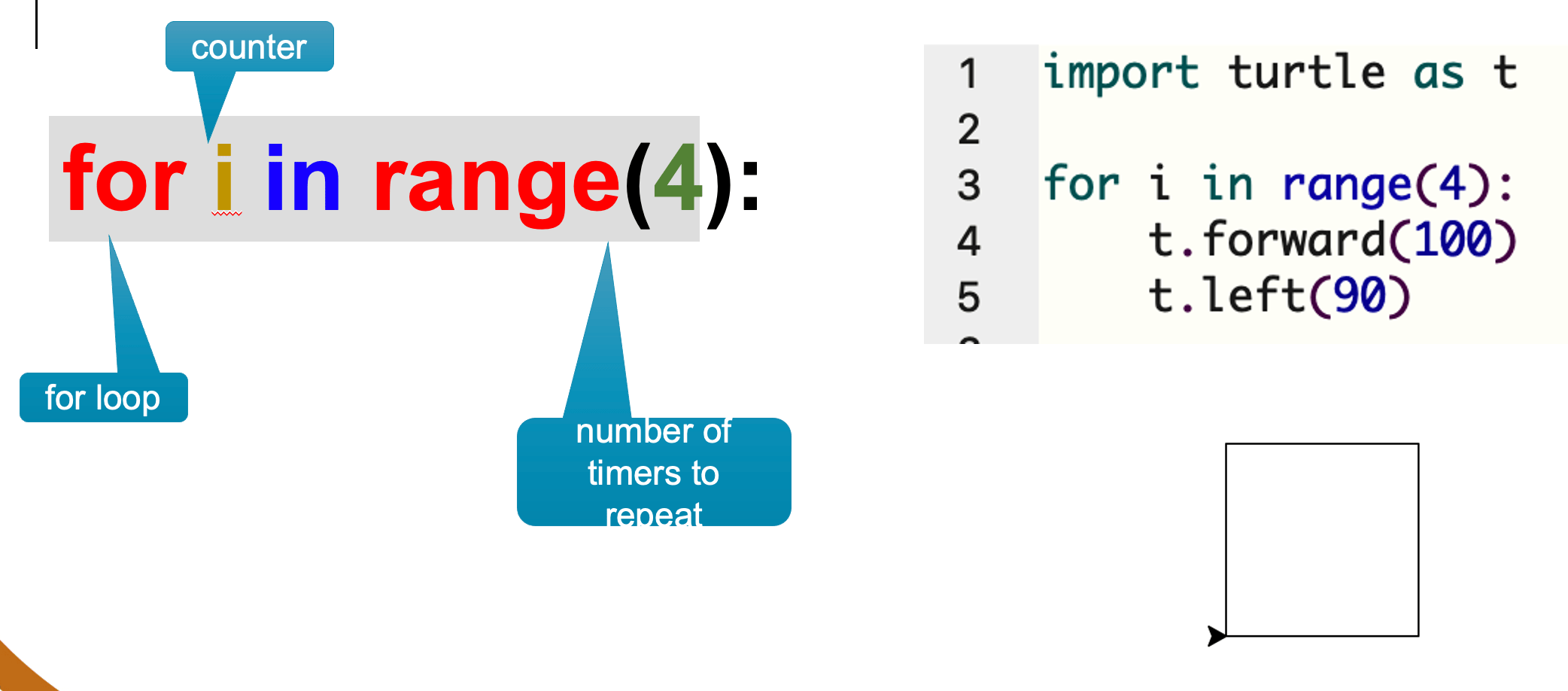
The for loop repeats a block of code for number of times. In this example, we will repeat.
Key points to remember
- The for loop is one kind of loop. It uses a counter which takes on a value every time the loop iterates.
- The range() function indicates how many times the statement will repeat. For example range(4) means repeat 4 times and range(10) means repeat 10 times
Version 1: For loop with only end value
	    for i in range(endValue):
	        Statements
The starting value of loop is 0. In actual fact, range(4) generates four numbers 0,1,2 and 3 and the counter takes on each value one at a time.
Example 1
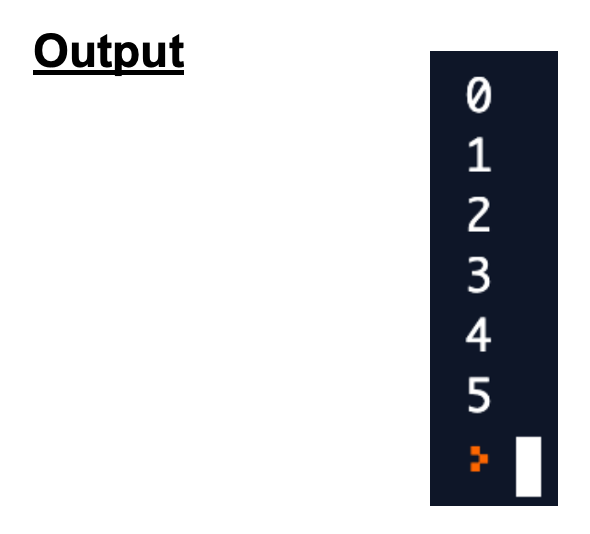
	   for i in range (6):
	        print(i)
the output is:
Version 2: For loop with start and end value
	    for i in range(startValue, endValue):
	        Statements
The starting value of loop can be changed to any given number. Note: Start value must be less than the end value, otherwise loop will not be executed.
Example 2
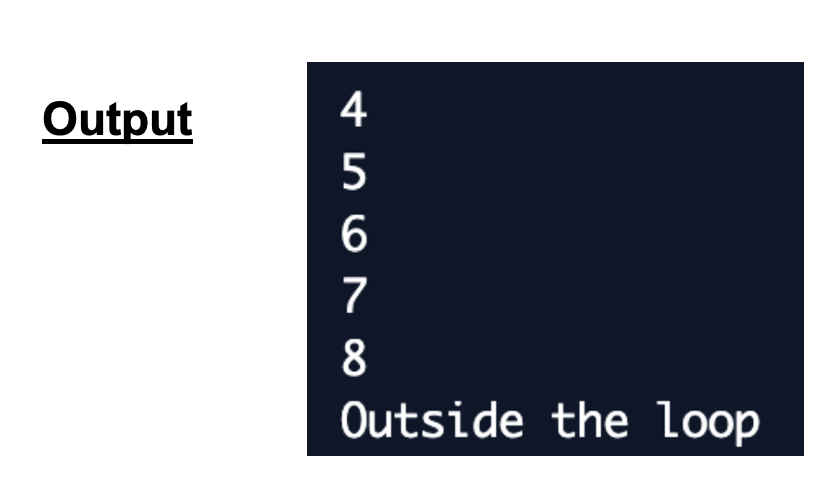
	   for i in range (4:9):
	        print(i)
	   print("Outside the loop")
the output is:
Version 3: For loop with increment value
	    for i in range(startValue, endValue, stepValue):
	        Statements
The starting value of loop can be changed to any given number. Step value can be changed from 1 to any value. Note: Step value must be negative if start value is greater than end value.
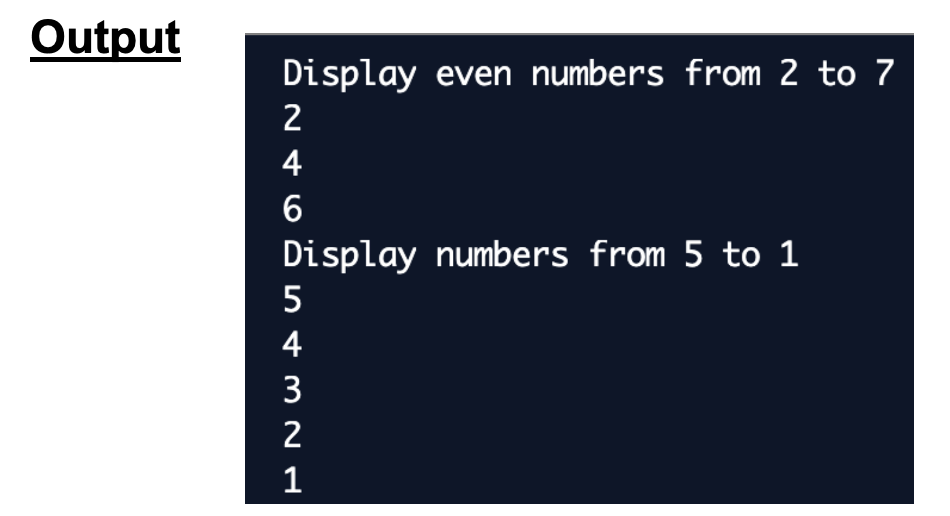
Example 3
	   print("Display even numbers from 2 to 7")
	   for i in range (2,7,2):
	        print(i)
	   print("Display numbers from 5 to 1")
	   for i in range (5,0,-1):
	        print(i)
The output is:
Example using loop
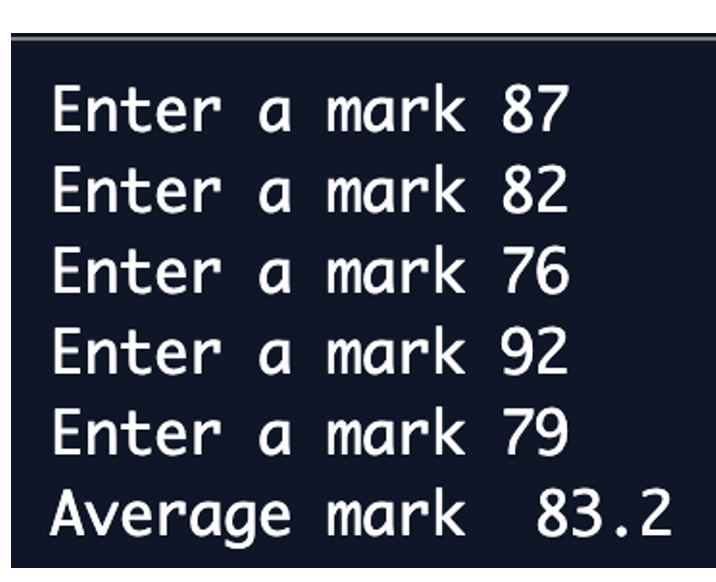
Exercise 1: Write a program that reads 5 marks of a student, calculates and displays the average price.
	    # program to read 5 marks and display its average
        total_marks = 0

        for i in range(5):
        mark = int(input("Enter a mark "))
        total_marks = total_marks + mark

        avg_mark = total_marks / 5

        print("Average mark ", avg_mark)
Note that # indicates a comment line
the output is: